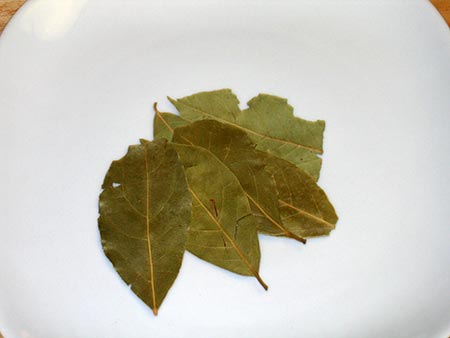
Bay leaf (tejpat)
Bay leaf is the aromatic leaf and used as a herb to flavor the dishes.
2 Responses
Leave a Reply
You must be logged in to post a comment.
Bay leaf is the aromatic leaf and used as a herb to flavor the dishes.
You must be logged in to post a comment.

Last Updated: January 2026
Welcome to Manjula’s Kitchen (“Company,” “we,” “our,” or “us”). These Terms & Conditions (“Terms”) govern your access to and use of the website manjulaskitchen.com (the “Website”).
By accessing or using the Website, you agree to be bound by these Terms. If you do not agree, please do not use the Website.
By using this Website, you represent that you have read, understood, and agree to be bound by these Terms and by our Privacy Policy. These Terms apply to all visitors, users, and others who access the Website.
You may use the Website solely for personal, non-commercial purposes. You agree not to:
We reserve the right to restrict or terminate access to the Website for violations of these Terms.
All content on this Website, including but not limited to recipes, text, photographs, videos, graphics, logos, and design elements, is owned by or licensed to Manjula’s Kitchen and is protected by copyright, trademark, and other intellectual property laws.
You may not reproduce, distribute, or create derivative works from our content without express written permission.
If you submit or post content to the Website (including comments, recipes, images, or feedback), you grant Manjula’s Kitchen a non-exclusive, royalty-free, worldwide, perpetual license to use, reproduce, display, and distribute such content.
You represent that:
We reserve the right to remove user content at our discretion.
While we strive to ensure that information on the Website is accurate and up to date, we do not guarantee the completeness, reliability, or accuracy of any content, including recipes, cooking instructions, or nutritional information.
Content is provided for informational purposes only and may change without notice.
The Website may contain links to third-party websites or services. These links are provided for convenience only. We do not control and are not responsible for the content, policies, or practices of third-party websites.
Accessing third-party links is at your own risk.
The Website and its content are provided on an “as is” and “as available” basis without warranties of any kind, express or implied, including but not limited to warranties of accuracy, reliability, or fitness for a particular purpose.
We do not warrant that the Website will be uninterrupted, error-free, or secure.
To the fullest extent permitted by law, Manjula’s Kitchen shall not be liable for any indirect, incidental, consequential, or special damages arising out of or related to your use of the Website or reliance on its content.
Your sole remedy for dissatisfaction with the Website is to discontinue use.
You agree to indemnify and hold harmless Manjula’s Kitchen from any claims, damages, liabilities, or expenses arising out of your use of the Website, violation of these Terms, or infringement of any third-party rights.
These Terms shall be governed by and construed in accordance with the laws of the applicable jurisdiction, without regard to conflict of law principles.
We reserve the right to modify or update these Terms at any time. Changes will be effective immediately upon posting to the Website. Your continued use of the Website constitutes acceptance of the revised Terms.
We may suspend or terminate access to the Website at any time, without notice, for conduct that violates these Terms or is otherwise harmful to us or other users.
If you have any questions regarding these Terms & Conditions, please contact us via the Website’s contact page or at
They do have different flavors. The one you’re thinking of, which is sometimes called “Indian bay leaf” is usually much larger (maybe 4-5 inches long), it has three spines down the middle instead of one, and it is actually the leaf of the cassia plant. (Cassia bark is also used as a substitute, or sometimes interchangeably with cinnamon.) The cassia “bay leaf” has a cinnamon- or clove-like flavor, totally unlike the other variety.
I’ve met Indian cooks who insist that the cassia “bay leaf” is the real thing and that one should not substitute the laurel “bay leaf” that is common in the U.S. I’ve also met knowledgeable, great Indian cooks who use the laurel “bays” freely and with great success and who don’t seem to be aware, or be overly concerned that they’re making any kind of substitution–or don’t consider it to be a substitution. India is a very big country and I’m sure there is good precedent among different people for each of the varieties. One source I’ve read about Punjabi cooking in fact specifies that the smaller laurel bay leaves be used, and describes the cassia bays as something used more in the South. I’ve also seen a transcription of an old family recipe for garam masala from a Punjabi woman in Delhi in which she vehemently insists that only cassia bay leaves be used. I think it’s the kind of thing where if you ask 10 people, you’re likely to get 10 different answers.
In Indian groceries in the U.S. they’re often found side by side on the shelf, with no distinction made on the labels, and no price variation.
Easy way to tell them apart is by simple appearance: 3-spines are cassia, 1-spine are laurel.
If this is what Manjula uses, I’d be happy to just trust her experience and go with it in her recipes.
I believe that the picture above of the (tejpatta) leaves is actually just bay leaves (not the tejpatta variety) I know that they are also called Indian bay leaves but they have very distinct flavours from each other do they not?
thanks